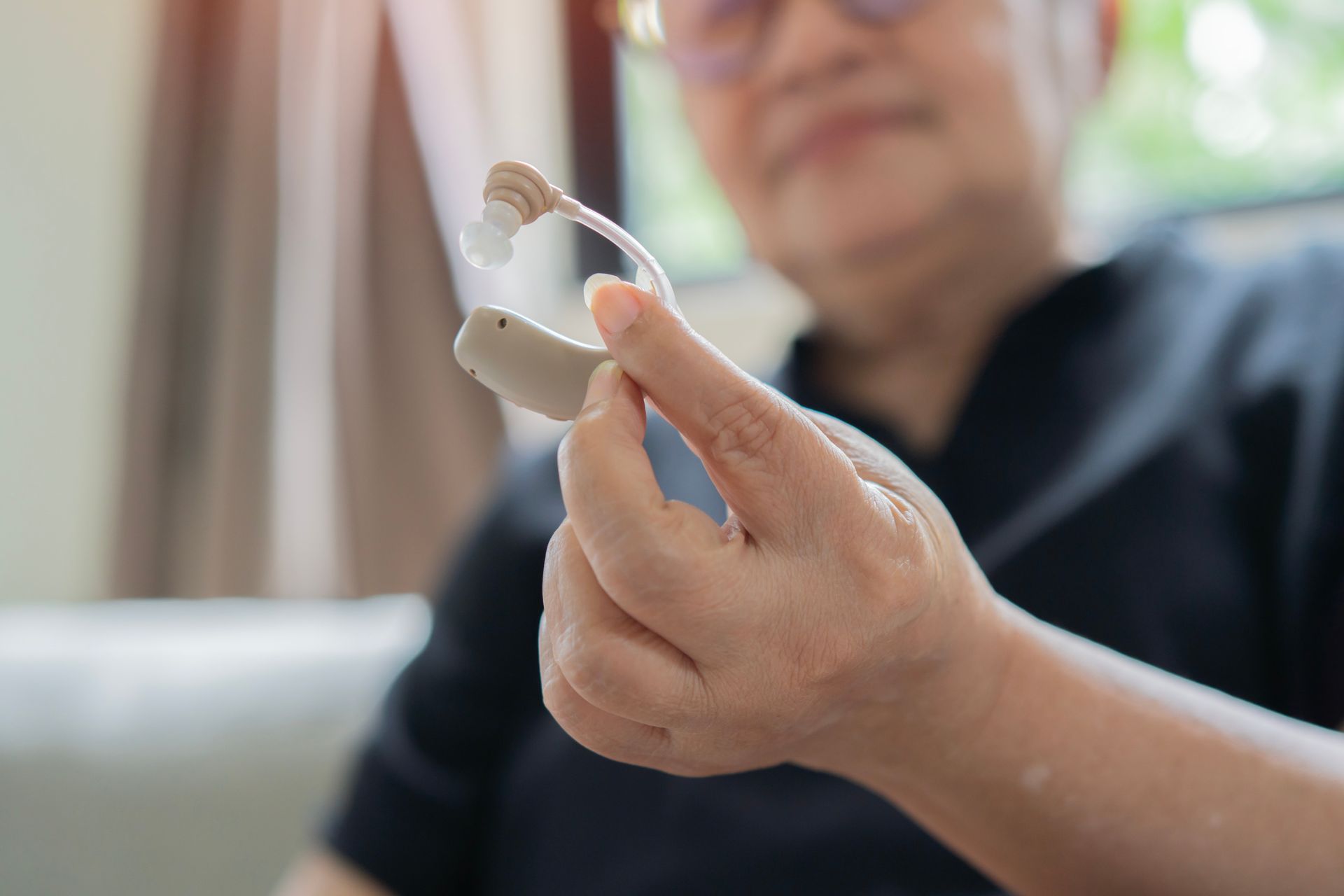
Hearing Aid Not Working? What Can Be Repaired in Cape May Court House and What to Bring
When your hearing aid stops working the morning of an important appointment, the frustration is real. In Cape May County, the coastal humidity and salt air speed up two of the most common causes of hearing aid failure — moisture damage and wax buildup — so the region sees these problems more often than drier, inland areas. Knowing your symptom before you walk in helps you get the right fix faster.
What Does Your Symptom Most Likely Mean?
Different symptoms point to different problems, and many can be addressed right in the office. Here is a quick breakdown to help you self-triage before your visit.
Weak or muffled sound: The most common cause is a wax blockage on the speaker dome or a clogged wax filter. Try cleaning the dome and swapping the wax guard at home first. If sound stays muffled, an in-office cleaning and speaker inspection can usually sort it out.
Cutting in and out: Intermittent sound almost always points to moisture in the housing or at the battery contacts, or a loose receiver wire. Leaving the aid in a dehumidifier overnight is a good first step. If the problem continues, the contacts may need cleaning or the receiver may need a closer look.
Whistling or feedback: A dome that is not seated snugly in the ear canal is the usual culprit. Re-seat it firmly. If whistling persists, ear canal wax buildup or a loose custom mold fit may be the cause — both are addressed in-office.
Completely dead, no power: Replace the battery first and check the contacts for visible corrosion. If a fresh battery does not solve it, moisture damage or a faulty battery door is likely, and a full diagnostic is the next step.
Sound quality changed suddenly: If the aid powers on and sounds clear but just seems 'off,' the issue may not be physical damage at all. Ear canals change gradually with age or weight change, and programming may have drifted from your current hearing profile. This is a service visit, not a repair — and it may call for a fresh hearing test before reprogramming.
Repair vs. Reprogramming — Why the Difference Matters
Reprogramming restores the right sound settings for your ears right now. Physical repair fixes the hardware. Knowing which one you need prevents a wasted trip and sets the right expectations walking in.
A good rule of thumb: if the aid turns on and passes a basic function check but just sounds wrong, start by considering whether your hearing has shifted. If the aid is physically damaged, dead, or intermittent, that is a hardware repair. Some visits require both — a repair and a reprogramming — especially if the aid has been out of service for a while.
You can explore the full range of hearing aid repair and services available to get a clearer picture of what an in-office visit covers.
Can You Fix a Hearing Aid Bought Somewhere Else?
Yes, most independent audiology practices can evaluate and perform common repairs on major-brand aids regardless of where you purchased them. You do not need to go back to the original seller for routine cleaning, wax guard replacement, moisture purging, or basic hardware checks.
Custom hearing aids and swim molds are also repairable or remakeable in-office. Swim molds — especially relevant along the Cape May County coast — can degrade, tear, or lose their seal over time. A new ear impression and a remade mold can restore a proper fit and protect the aid itself from water exposure.
Living on the Shore: Why Cape May County Aids Need More Attention
Salt air and high humidity are hard on small electronics. Moisture works into the housing during a beach walk or a boat trip and corrodes the internal contacts slowly, often before any obvious symptom appears. Wax production can also increase in humid conditions, clogging filters faster than average.
Using a nightly dehumidifier and replacing wax guards on a regular schedule — rather than waiting for sound to drop off — can significantly extend the life of an aid in this coastal environment. Custom and swim molds deserve a periodic fit check too, since the ear canal shifts with temperature and humidity changes throughout the year.
What to Bring to Your Repair Visit
Showing up prepared makes the appointment faster and more productive. Bring the following:
- Both hearing aids, even if only one seems broken — comparison helps with diagnostics
- The charging case or battery compartment
- Any accessories you use, such as a remote mic, TV streamer, or the phone you use with the app
- A short list of your symptoms and when they started
- Purchase or warranty documentation if you have it
- A previous audiogram if your aids came from another provider
At the visit, expect the audiologist to clean the aids, inspect for physical damage, check and replace wax guards, run a moisture purge if needed, and do a quick function test. This is a focused appointment — shorter than a full fitting — but thorough enough to catch most common problems on the spot.
Catching a minor issue early, like a clogged filter or corroded contact, almost always costs less than waiting until the aid fails completely and repair is no longer cost-effective compared to replacement.
Knowing your symptom, bringing the right items, and understanding whether you need a repair or a reprogramming gives you a real head start before you ever sit down in the chair.
Schedule a repair visit with Cape May County Hearing Aid Dispensary and bring your aids in for a look.